


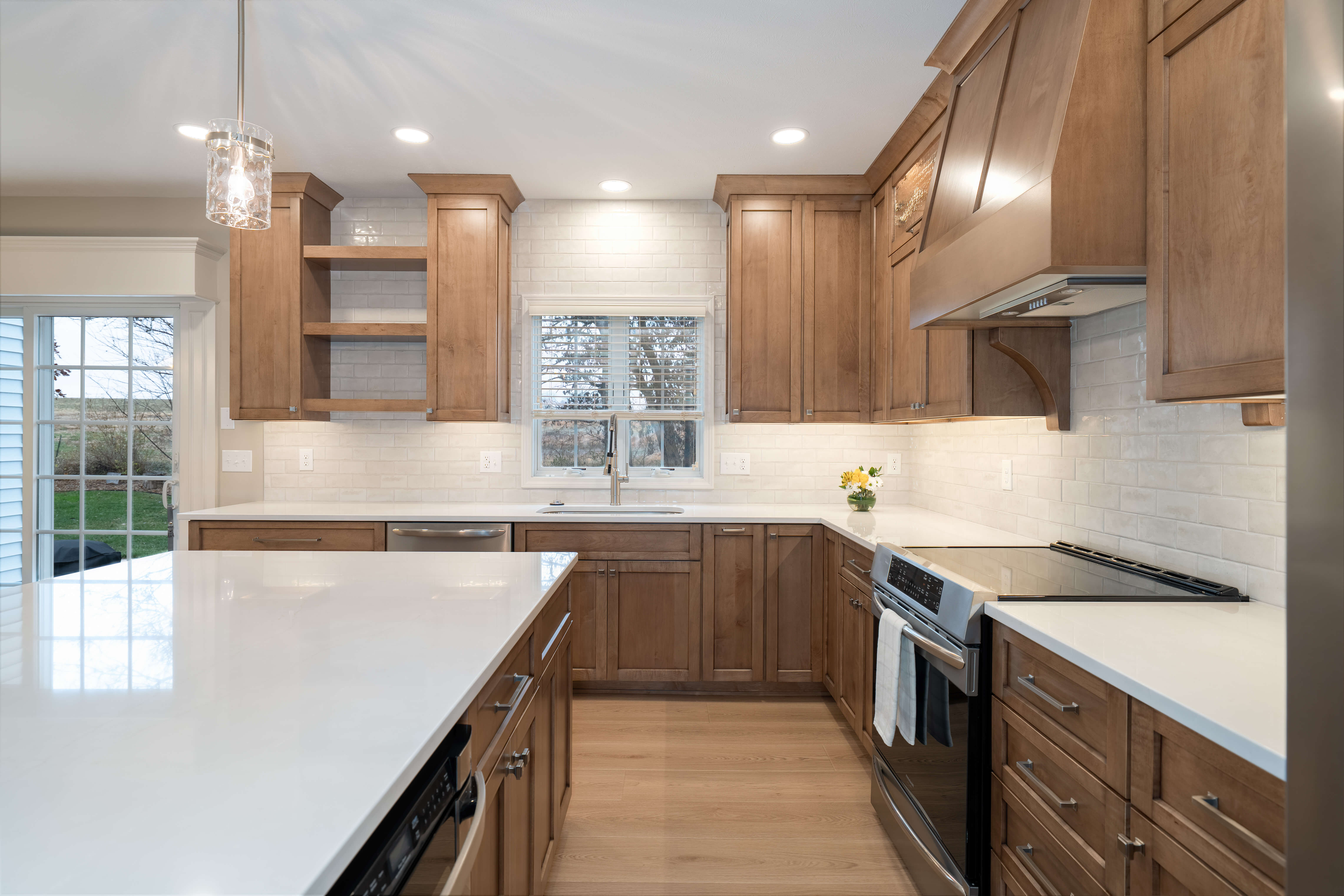
A kitchen remodel is one of the most meaningful investments you can make in your home, but without a clear plan, it can quickly become overwhelming. From defining your goals to understanding realistic budgets and timelines, every decision plays a role in how successful your project feels in the end. That’s where a thoughtful kitchen remodel checklist becomes essential.
Homeowners planning a kitchen remodel in Bloomington, IL or throughout Central Illinois often start with the same questions, like what to expect, how the process works, and how to avoid costly missteps. This guide walks through the key kitchen remodeling steps, giving you a clear path forward and helping you understand exactly what to know beforehand.
In This Guide:
- Why a Kitchen Remodel Checklist Matters
- Start With Clear Goals
- Understand Budget Expectations Early
- Choose the Right Remodeling Partner
- Develop a Detailed Design Plan
- Finalize Scope and Timeline
- Prepare for Construction
- Follow the Right Order During Construction
- Final Walkthrough
- Start Your Kitchen Remodel the Right Way
Why a Kitchen Remodel Checklist Matters
A well-defined kitchen renovation checklist helps bring structure to what can otherwise feel like a complex process. It keeps decisions organized, aligns expectations early, and reduces the likelihood of surprises during construction.
In Central Illinois, where many homes were built between the 1980s and early 2000s, remodeling projects often involve more than cosmetic updates. Layout changes, aging systems, and evolving lifestyle needs all come into play. A clear plan ensures those factors are addressed intentionally, not reactively.
1. Start With Clear Goals
Every successful remodel starts with clarity. Before getting into design or pricing, take time to define how your kitchen needs to function differently. This is one of the most important parts of any kitchen remodeling checklist, and it often determines how smooth the rest of the process will be.
Focus on function first:
- Layout and overall flow
- Storage needs and organization
- Appliance placement
- How the kitchen connects to surrounding spaces
Then consider how your goals align with your long-term plans. A homeowner planning to stay long-term will prioritize customization and durability, while someone thinking about resale may lean toward more timeless, broadly appealing choices. Having a general sense of investment early on also helps keep expectations aligned as you move into design.
Why This Step Matters
Rushing this phase often leads to changes during construction, budget increases, and a finished space that doesn’t fully solve the original problems. Taking the time to define clear goals upfront creates a smoother process, and a better outcome.
2. Understand Budget Expectations Early
Budget is one of the most important (and often most misunderstood) parts of any kitchen remodel. Having a clear understanding of investment early on helps guide decisions, prevent surprises, and keep the entire project aligned from the start.
The cost of kitchen remodels in Central Illinois is influenced by several key factors, not just square footage.
What drives cost the most:
- Cabinetry and custom millwork
- Appliance selections and upgrades
- Layout changes or structural modifications
- Material quality (countertops, flooring, finishes)
- Level of design detail and customization
Rather than thinking in terms of a fixed number, it’s more helpful to think in ranges. A well-planned remodel aligns your goals with a realistic budget, allowing you to prioritize where to invest and where to simplify.
Why This Step Matters
Unclear or unrealistic budgets are one of the biggest causes of frustration during a remodel. When expectations aren’t aligned early, it often leads to redesigns, delays, or difficult compromises mid-project. Establishing a clear investment range upfront creates a smoother process and better decision-making at every stage.
3. Choose the Right Remodeling Partner
Who you choose to guide your project will have a direct impact on your experience, from the clarity of the design phase to how smoothly construction runs. A well-defined kitchen remodel process starts with a team that prioritizes planning, communication, and alignment from the beginning.
Look for a partner who provides:
- A clearly defined process from planning through construction
- Alignment between design decisions and budget early on
- Transparent communication at each stage
- Experience with projects similar in scope and investment
Working with an experienced Bloomington, IL kitchen remodeler helps ensure that decisions are made intentionally during the planning phase where they’re easier, more cost-effective, and less disruptive.
Why This Step Matters
Many of the most common remodeling challenges (such as delays, budget overruns, and miscommunication) can often be traced back to gaps in the planning process. Choosing the right partner early creates structure, clarity, and accountability, leading to a more predictable and well-executed project.
4. Develop a Detailed Design Plan
Once your goals and budget are clearly defined, the next step is turning those ideas into a fully developed plan. This is where your remodel begins to take shape, and where thoughtful planning prevents costly changes later.
A well-structured kitchen renovation planning guide goes beyond selecting finishes. It ensures that layout, functionality, and investment are all aligned before construction begins.
Key elements of a strong design plan include:
- Layout and workflow (how the space functions day to day)
- Cabinetry design and storage solutions
- Appliance placement and integration
- Lighting and electrical planning
- Material and finish selections
For many homeowners, this is the most demanding phase. There are a significant number of decisions to make, and each one impacts both the final result and the overall investment.
Why This Step Matters
Rushed or incomplete design plans are one of the most common causes of delays and budget increases during construction. When decisions are made early and documented clearly, the project moves forward with fewer surprises and greater confidence.
5. Finalize Scope and Timeline
With design decisions in place, your project begins to take on a clear structure. This stage defines exactly what will be done, how it will be executed, and what to expect along the way. A well-outlined kitchen remodel timeline helps set expectations early and keeps the project moving efficiently from start to finish.
At this point in the kitchen remodel process, your contractor should provide a detailed scope of work along with a realistic schedule. This ensures that materials, trades, and sequencing are all coordinated before construction begins.
A typical timeline includes:
- Planning and design: 4–8 weeks
- Pre-construction and material ordering: 2–4 weeks
- Construction: 6–12 weeks
Why This Step Matters
Unclear timelines often lead to frustration during construction. When expectations aren’t set early, even normal delays can feel unexpected. A well-defined timeline creates transparency, helps you plan accordingly, and keeps the entire project aligned from day one.
6. Prepare for Construction
Before any demolition begins, a well-organized pre-construction phase ensures everything is in place for a smooth and efficient build. This step bridges the gap between planning and execution, and it plays a critical role in keeping your project on schedule.
At this stage of the kitchen remodel process, your contractor coordinates logistics behind the scenes—aligning materials, schedules, and trade partners so construction can move forward without unnecessary delays.
Preparation typically includes:
- Ordering cabinetry, appliances, and key materials
- Finalizing construction schedules and sequencing
- Coordinating trade partners (plumbing, electrical, etc.)
- Preparing your home for the upcoming work
It’s also the time to plan for temporary adjustments to your daily routine, since your kitchen may be out of service during construction.
Why This Step Matters
Many delays in remodeling projects can be traced back to gaps in preparation, such as missing materials, scheduling conflicts, or last-minute decisions. A strong pre-construction phase minimizes those risks, creating a more predictable timeline and a more organized overall experience.
7. Follow the Right Order During Construction
Once construction begins, progress depends on following a clear and intentional sequence. Each phase builds on the one before it, and staying organized is what keeps the project moving efficiently. This is a key part of any step by step kitchen remodel checklist.
Understanding the order of work also helps set expectations. While every project is different, most follow a consistent structure within the overall kitchen remodeling steps.
A typical sequence looks like this:
- Demolition and removal of existing materials
- Structural changes (if needed)
- Plumbing and electrical rough-ins
- Drywall, flooring, and prep work
- Cabinet installation
- Countertops, fixtures, and finishing details
Each step is dependent on the one before it. For example, cabinets can’t be installed until rough mechanical work is complete, and countertops can’t be templated until cabinets are in place.
Why This Step Matters
When the sequence is rushed or disrupted, it often leads to delays, rework, and added costs. Following a clear order ensures each phase is completed properly, allowing the project to move forward with consistency and fewer interruptions.
8. Final Walkthrough and Project Completion
As construction wraps up, the final phase focuses on ensuring every detail meets expectations. This is where your vision fully comes to life and where the quality of the process becomes most visible.
The final stage of a kitchen renovation checklist includes a thorough walkthrough of the space, allowing you to review finishes, functionality, and overall craftsmanship. Any remaining items are identified and addressed before the project is considered complete.
This phase typically includes:
- A detailed walkthrough of the finished kitchen
- Addressing final adjustments or touch-ups
- Reviewing how key features function and operate
- Confirming all work aligns with the original plan
A well-executed finish ensures that your new kitchen not only looks exceptional but functions exactly as intended.
Why This Step Matters
The final walkthrough is about more than just checking boxes; it’s about ensuring confidence in the finished space. Taking the time to review details and resolve any remaining items helps deliver a result that feels complete, polished, and ready to enjoy for years to come.
Start Your Kitchen Remodel the Right Way
A well-executed kitchen remodel starts with a clear plan and the right team to guide you through it. At Landmark Construction, our design-build approach is built around thoughtful planning, clear communication, and delivering a finished space that reflects how you truly live in your home. From initial consultation through final walkthrough, every step is intentional and aligned with your goals.
If you’re considering a kitchen remodel in Bloomington, IL, or anywhere in Central Illinois, the next step is a conversation. Reach out to our team to schedule a consultation and begin planning your project with clarity and direction.